The effective treatment of adolescents with substance abuse and behavioral disorders requires an approach that includes attention to every aspect of a young person’s life. We see every individual as a whole being. In addition to fully understanding the emotional, developmental, physical, psychological, familial, social and cultural factors, there must be appropriate resources in place to address these issues. Need help? Contact Us Today! (866) 889-3665
The American Psychiatric Association has revealed new guidelines under consideration for the 5th edition of the Diagnostic and Statistical Manual of Mental Disorders, including changes to the categories of adolescent substance abuse, learning disabilities, and many other issues that can effect teens, such as examining new diagnoses for adolescents. Many anticipate that more varied diagnoses will help clinicians focus more on treating individual symptoms rather than over-medicating the population.
Many teens use drugs and alcohol as an attempt to self-medicate. Dual Diagnosis teen drug and alcohol rehab is an effective way for teens to deal with potentially crippling substance abuse issues and accompanying factors, such as bipolar disorder, borderline personality disorder, ADHD, eating disorders, and depression. In a safe environment, teens learn valuable tools while dealing with drug and alcohol dependence and other challenges. Staff clinicians help to create personalized treatment programs to fit each teen’s needs, working to establish self-value and self-care to ensure lifelong success.
NPR reports that teens today suffer from more anxiety than they did during the Great Depression. Researchers cite inflated pressures, such as the need to have the right material objects and have the right appearances as the top contributors to teen anxiety. The pressure to have everything, be everything, and handle everything is certainly a huge stress in teen living.
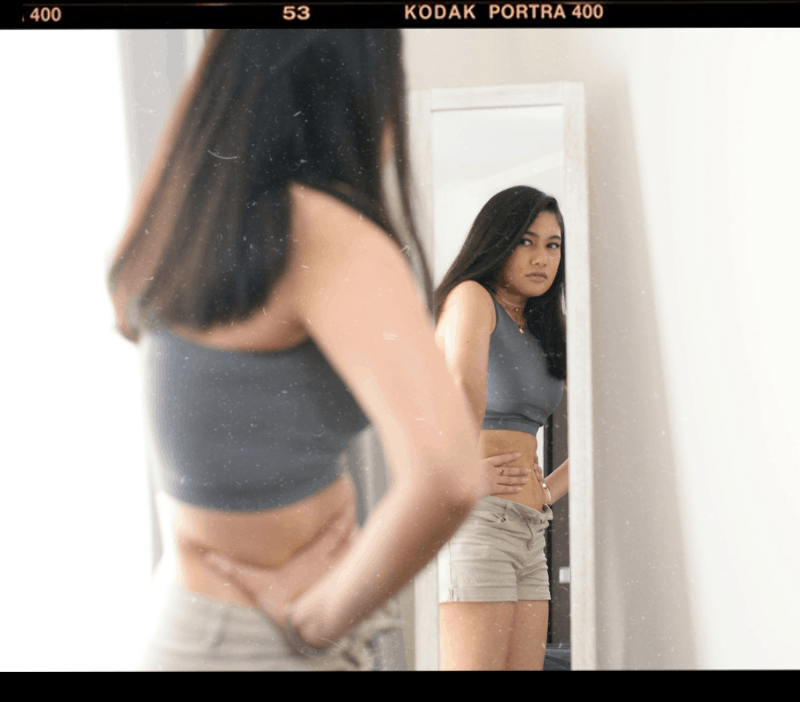
Developing a strong sense of self can be difficult when ads pull you in every direction, college admission becomes insanely competitive, and body obsession consumes our culture. It’s no surprise that teens turn to drugs, alcohol, and prescription pills to take the edge off. It's also no surprise that teens develop body dismorphia and eating disorders. By addressing every aspect of a teen’s life, a dual diagnosis treatment center helps an adolescent drug and alcohol user find ways to cope in today’s busy world by addressing the underlying issues, and to develop the tools to keep them on the path to success.
I was thinking today about how when I was younger, I was obsessed with reading the stories of struggling girls in the back of Seventeen magazine, or through the messed-up-teens-help-books my mom got. I didn’t read them to identify; I read them for inspiration. I remember a particular article about a teenage anorexic that made me feel especially competitive. “That girl got down to 80 pounds? I’m only at 89? I have to get skinnier!” I learned new tricks and techniques, and each article or book I read pushed me closer to my disorders- not to recovery. From those articles, I felt like my self injury, eating disorder and drug use were all somehow validated. I had it in my head that the girls in the articles had gotten bad enough to deserve attention and to deserve help. When I had begun to feel like I could no longer carry on doing what I was doing, I resisted asking for help because I wasn’t as bad as the kids in the articles. I didn’t weigh 80 pounds, I weighed 89. I hadn’t gotten stitches, but I couldn’t stop cutting myself. I wasn’t a teenage runaway on heroin and crack, but my drug problem was getting me into trouble at school. I felt like in order to get help, I needed to be worse off.
Fortunately, the people around me thought that I was deserving of help and recovery. At Visions Adolescent Treatment Center, I was able to receive help for all aspects of my disordered thinking. I worked on the core issues that had blossomed into my self injury, eating disorder, and drug abuse. I met other teens like me, and learned not to compare myself to anyone. The most important thing I think I learned there was that everyone’s story is different, and that it doesn’t matter how bad it got for me. The only thing that matters is a desire to get better. Everyone is deserving of a chance at recovery, and I’m so glad I took mine. Click here for adolescent treatment for girls.
The internet can be used for good or for evil. Many support groups and message boards can be found online that can help teens find open ears to talk about their struggles. Other message boards and websites exist that can help teens learn everything from how to cook up heroin to tips to maintaining an teen eating disorder. When I was really into my adolescent eating disorder, I found a group online to support me. The only problem was that they were supporting me in keeping my eating disorder rather than recovering from it. Pro-Ana and Pro-Mia sites promote anorexia and bulimia as lifestyle choices, not dangerous disorders. It is the ultimate symbol of denial and sickness, in my opinion. When I was in the fog of my own adolescent eating disorder though, I relied on those sites to cosign and validate my own disordered thinking. Pro-ana sites have everything from tips to losing weight and faking eating to “thinspiration”-- photos of skinny girls and celebrities. Losing weight and becoming sicker is a badge of honor rather than a red flag.
As my eating disorder made my life unmanageable, I needed those sites to make me feel like I was okay. It helped me justify my behavior. What I know now is that I was looking for identification. When I went to the adolescent eating disorder treatment center, I found identification there too, only this time it was for good and not destructive. Suddenly I was surrounded by people who wanted to help me get better, not sicker. I went and browsed a pro-ana site earlier and felt a sort of sickening allure. It seemed easy to fall back into the darkness of my E.D. but ignorance is bliss- I can no longer live in denial. I know that anorexia and bulimia, AKA Ana and Mia, aren’t my friends. Ana and Mia want me to be miserable and sick. Today, thanks to the initial help I got at Visions in Malibu, I no longer need them for friends. I have real friends- friends that are actually people that care about my well being.
Michael Jackson passed away this afternoon in LA after suffering a cardiac arrest. You have to wonder what led to this tragic end for the King of Pop. I know that his weight has dropped dramatically over the last few years and because of his enormous sense of privacy, one can only speculate what could have happened. Poor Michael Jackson. I know that many things can lead to cardiac arrest. It is one of the biggest risk factors of the two things that plagued my own young life: drug abuse and eating disorders.
Perhaps it’s unfair or too cynical to conclude that Jackson’s end may have been the final result of a lifestyle of damaging weight loss and/or drug abuse, but celebrity deaths can sometimes help to bring attention to the huge risks that lie in dangerous lifestyles. His repeated cosmetic surgeries make me wonder how unhappy he might have been with himself. I hope that Jackson’s death wasn’t the end result of an eating disorder or drug abuse. That would mean he had been miserable for years, and I pity anyone- celebrity or not- who has to endure that kind of pain. I hope that his kids will be okay, and that his family can have some peace. Rest in peace Michael.
One of the ways my addiction manifested itself was through my eating disorder. It was a difficult thing to tackle my substance abuse and eating disorder at the same time, but my counselors helped me see how the same feelings that led me into my eating disorder also led me into substance abuse. I just read in People magazine that American Idol judge Kara DioGuardi went to treatment for her binge eating disorder when she was younger, and that finding a creative outlet like music helped her to put an end to such a self-destructive behavior.
.My counselors in treatment helped me to identify some of the motivations behind my using and my eating disorder and my drug abuse, most of them tying in to my need to control the world around me. I felt that if I could control everything, I wouldn’t be so afraid. As I continued in my recovery, I began to build up my self esteem by arguing against my defective logic and replacing the negative self talk with positive affirmations. I felt like a big dork doing it at first, but reluctantly recited my affirmations in the mirror anyway. I finally got to where I could look in the mirror and say, “I love you,” and mean it. Kara’s idea about finding an outlet for feelings is right on. I found that painting and drawing was a great outlet for me to express my feelings. When I paint and draw, it is meditative. All of the people I know in recovery have a creative streak, and developing mine has been a wonderful tool in battling both my addiction and my eating disorder.
VISIONS ADOLESCENT TREATMENT CENTERS Personalized programs dedicated to helping youth and their families recover from the destructive effects of substance and other behavior related problems. (866) 889-3665